3D Design for Everyone

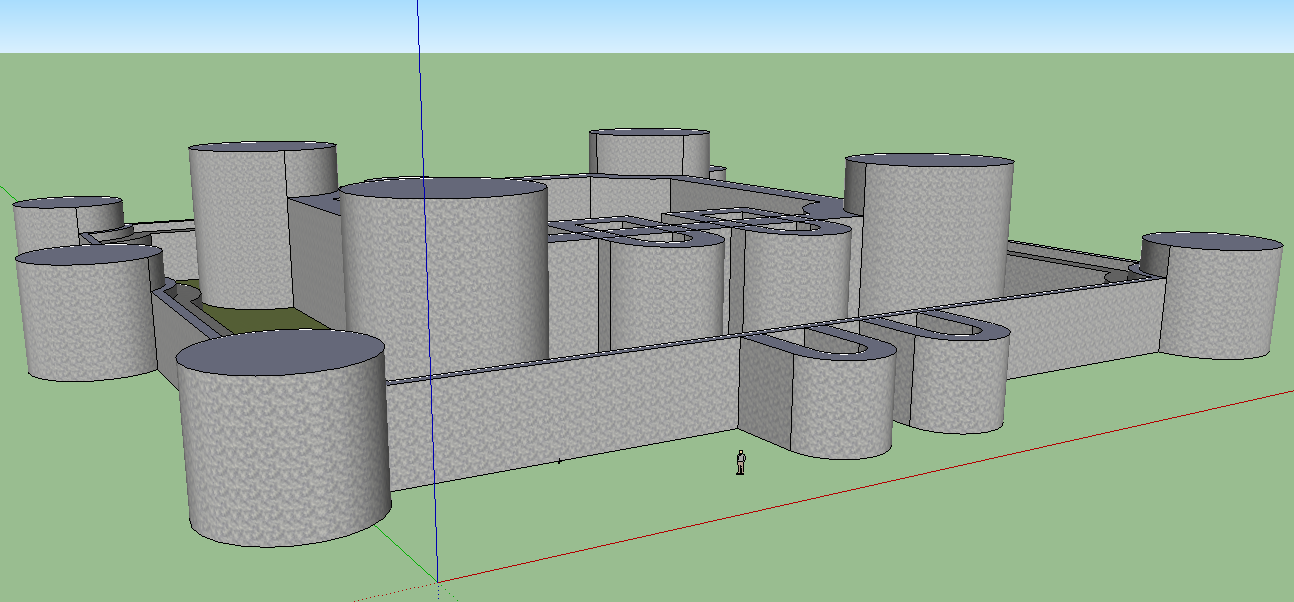
Last Sunday night I finally taught myself how to use the free 3D design software, SketchUp.  It’s pretty cool.  It took me about 30 min to watch a few video tutorials and get the hang of it, and another hour and a half to make a couple models of a castle (based on the dimensions in David Macaulay’s book, Castle). Here’s the final version:
Castle

Give it a try yourself!

Posted in 3-D Printing, Innovation | Tagged , , , , , , , | 1 Comment

iOS 7 after 48 hours. I’m still left flat.

So I also updated my iPad 2 and spent the weekend playing with iOS 7 on both phone and tablet, and the experience reinforced my initial impressions.  For the phone form factor, the new OS is definitely harder to read and harder to navigate.  The thin font is harder to read, both in menus and on the apps.  As I mentioned before, the new flat icons with a low contrast, limited color palette throw away a lot of identifying information, and make it harder to identify the app you’re looking for.  With such a high resolution screen, why have such low information density?  The icon labels are also hard to see against most backgrounds, and some of the graphics are really confusing.  The Safari app, for example actually now looks like a clock, rather than a web navigational tool.  And Settings looks like a Wankel rotary engine crossed with a grey biohazard sign.  Weather looks like two pieces of candy.  Inside the apps, some of the primary blue and red colored menu lettering is quite distracting compared to the previous use of subtle colors and plain and bold text. And there’s a lot of wasted white space for such a small screen.  Another paradigm seems to be the use of more menu and interface items that change depending on the context.  Like the gosh-awful Microsoft Office ribbon, such variability in an interface actually slows you down as your brain struggles for a fraction of a second to reorient itself when the layout changes.

Interestingly (with the exception of the flat icons), the interface does look somewhat better on the larger screen of the iPad.  Menus and labels are easier to read and navigate, and the greater amount of screen real estate allows more information to be displayed.  As a consequence, Notes, Reminders and Contacts all work much better on the iPad.  The stylish design sacrifices less functionality when there’s a lot more screen real estate.

Still, there are some head scratching features on both platforms.  Double-clicking the home button to view active apps now shows a double row of  content windows above app icons.  When swiped side to side, the icons and the content windows move at slightly different rates, such that only one content window is in full view at any one time, but three or four icons are displayed below.  This display looks particularly weird on the iPad, with a LOT of empty space left between the three lonely icons displayed across the bottom of the screen, and it takes forever to scroll through a long line of apps.  I miss the old close-packed string of icons, which could be swiped quickly to find the app you wanted to access.  The new card-like display of open web pages in Safari is also rather confusing, compared to the previous OS.  Finally, the use of round portholes photos of people in the contact list is also a weird step backwards — when compared to a conventional square image, a round portrait throws away content (shoulders & surrounding environment), and makes it harder to identify the person at a glance.

I’m still left flat.  Style has reduced function, unfortunately.  For a company that used to set THE standard for user interfaces, that’s surprising.

Posted in Innovation | Tagged , , , , , , , | Leave a comment

September Evening Sky

Evening September Sky

Posted in Photography | Tagged , | 1 Comment

iOS 7. Eh.

20130919-111125.jpg
So I installed iOS 7 on my iPhone overnight, and I have to say the absence of Steve Jobs is showing. The new OS is pretty good, and there are some really useful new features, but Jobs would not have approved this release. Despite, or rather because of the new flat, simplified interface, the phone is harder to navigate, and controls are harder to access. The app icons in particular have thrown out a lot of information (where you want to see identifying details), yet there’s the additional complexity of the parallax multilayered surface. Why not use that graphics horsepower and make the app icons live images that better help you navigate? If you have three camera apps, or 50 games, how are you going to tell them apart with such flat, simple icons?

In some places the simple icons do help — wherever you want to keep the interface from obscuring content (as in Google docs), but in other instances where you want a lot of detail to help understand the interface, that detail is missing. Line thicknesses in the interface are really reduced, which is elegant, but which also makes it much harder to read the display. In some sense the interface seems better suited for a larger form factor.

I also had to discard my current background image because it made the apps unreadable, and it was very hard to find any sort of background where the new icons weren’t hard to read . And what’s with live backgrounds? Why would you want the background behind your apps to change randomly and pulsate? Unless you’re on the subway, stoned, and listening to iTunes?

On the bright side, I like iTunes radio (goodbye Pandora). Control center is nice once you get the hang of it. Quite a few apps and menus do get it right. For example, the compass is nice — it has a beautiful interface with more content than before (among other things it has a level feature). The keyboard is pretty good, as are some menus. The multiple window view in Safari is worse, however.

Bottom line: Form has triumphed over function in a way that makes the interface harder to use. Go ahead and upgrade if you want some of the new features, but keep your expectations low about the interface. C’mon Apple, you can do better.

Posted in Innovation | Tagged , , , , | 1 Comment

Unsettled Skies over South Boston

UnsettledSkies

… as a cold front pushes tropical air toward the Atlantic ocean.

Posted in Photography | Tagged | Leave a comment

Hundred year flooding in Boulder, Colorado continues

Talk about a tough natural disaster — major flooding in a mountainous region. Mudslides, roads completely destroyed, widespread flooding, really hard to travel anywhere. Two hundred and fifty-three people are missing.

“Military helicopter airlift to begin as soon as the weather clears in Boulder County. Stranded residents urged to use flares, sheets, mirrors Monday to alert helicopters.”

Fortunately the affected areas are near the Denver metro region and rescue gear is available. Lets hope most of the missing will turn up safe and sound.

20130916-111958.jpg
(From the Boulder Daily Camera, linked above. That used to be a road…)

Posted in Uncategorized | Leave a comment

Disruptive Innovation – Products, Technologies, and People, too.

“Disruptive Innovation”, is a term popularized by Clayton Christensen in his classic book, “The Innovator’s Dilemma.”  The book describes his research into how product development and market competition mature and eventually create products that have been incrementally improved (through “sustaining” innovations) so much that, relatively speaking, they actually become too expensive and/or too complex.  Essentially, diminishing returns have set in.  Meanwhile, a new technology or product comes along which in many dimensions is demonstrably inferior. However, in some other dimension(s) the new technology has the growth potential to overtake the capabilities, cost effectiveness, or quality of existing products and make them obsolete (a “disruptive” innovation).  Clay uses the evolution of different computer hard drive technologies as one example, and another illustration is the mp3 music file. The sound quality of an mp3 is clearly inferior to a compact disk (CD) recording, but other features such as portability and ease of sharing, along with the rapid growth of really cheap delivery systems (i.e. the Internet and iPods) quickly outcompeted CDs.

It should be emphasized that a new product or solution can be obviously inferior in some ways, but eventually dramatically superior in other ways that end up mattering more.  Sometimes the new product improves so much it ends up beating the old criteria, too.  In last Friday’s repost we saw how new smart-phone devices  are beginning to do the job of highly-trained (and highly compensated) health professionals with expensive diagnostic instruments.  At the current time, these devices do not provide the same high quality care.  But they’re probably good enough to be used for initial screening, or to enable patient self-monitoring.  And they’ll likely get much better as time goes by.  It will be interesting to watch what effect they have on conventional healthcare.

It’s also important to note that established firms have a very hard time pursuing disruptive innovations because they threaten existing products or offer too small a return in the near term, relative to current lines of business.  And this can be extended to people and their careers.  For many established employees a wealth of expertise, accomplishments, and personal contacts have been built up over their career.  Those are very valuable assets that produce a significant return.  Giving all that up to start from scratch in a new endeavor with a currently much lower return is a very hard thing to do.  That’s why new industries are often started by young, less established people.  However,  the really important lesson is that, long term, it may pay to disrupt yourself.  Taking what is now a lesser paying or lower responsibility job in a new industry might just be right choice that produces a bigger payoff later.

Posted in Innovation, Management, Uncategorized | Tagged , , , , , , , | 1 Comment

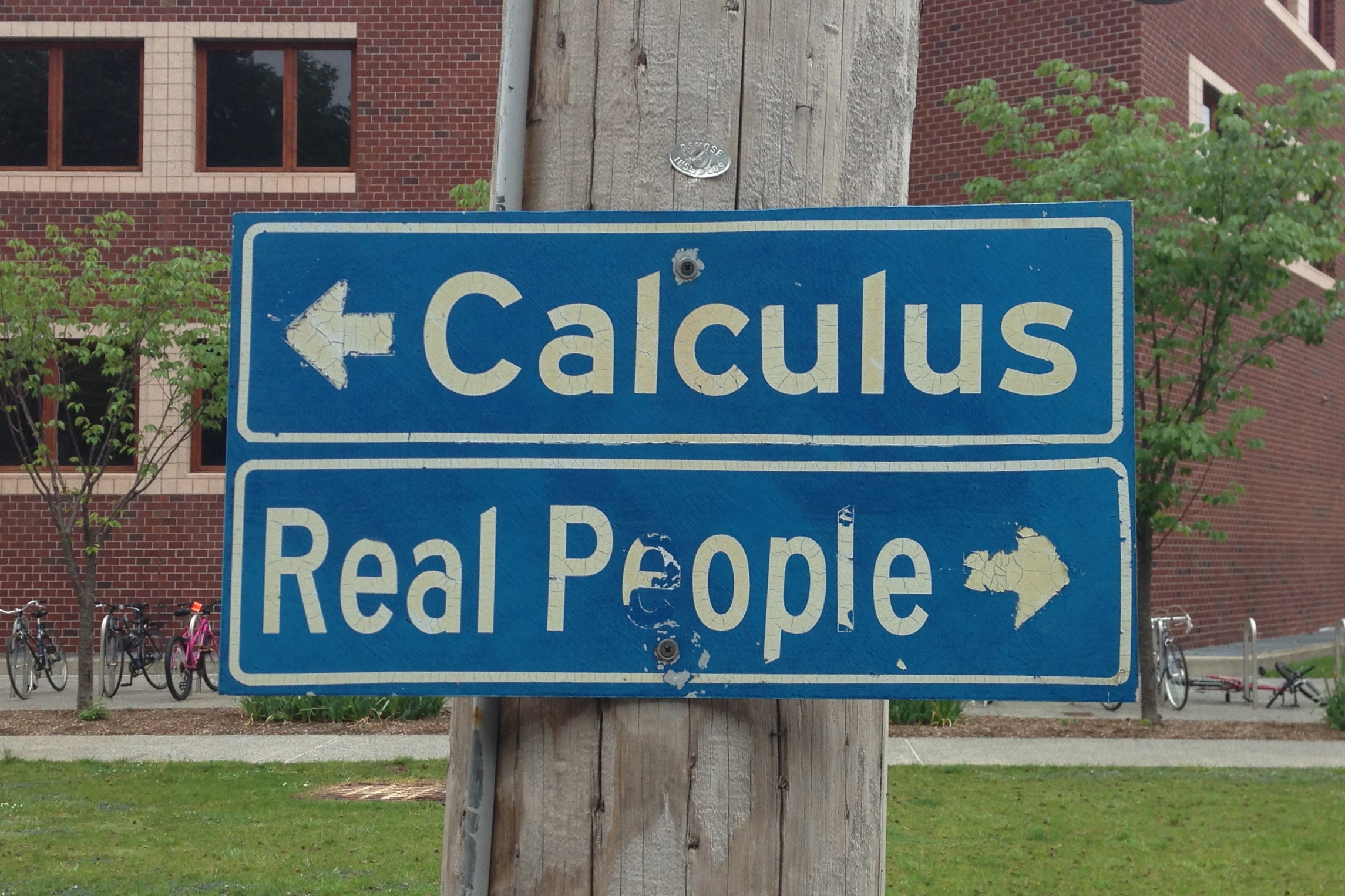
Seen on MIT’s campus

Seen on MIT's campus

Posted in Photography | Leave a comment

When a smartphone does a doctor’s job

There’s a wave of disruptive innovation building in healthcare based on networked mobile computing and sensor technology. Here, for example, is a cheap attachment for your smartphone, coupled to some powerful software — that has the potential to replace your optometrist: When a smartphone does a doctor’s job.

Posted in Innovation | Tagged , , , , | 3 Comments

Nikola Tesla

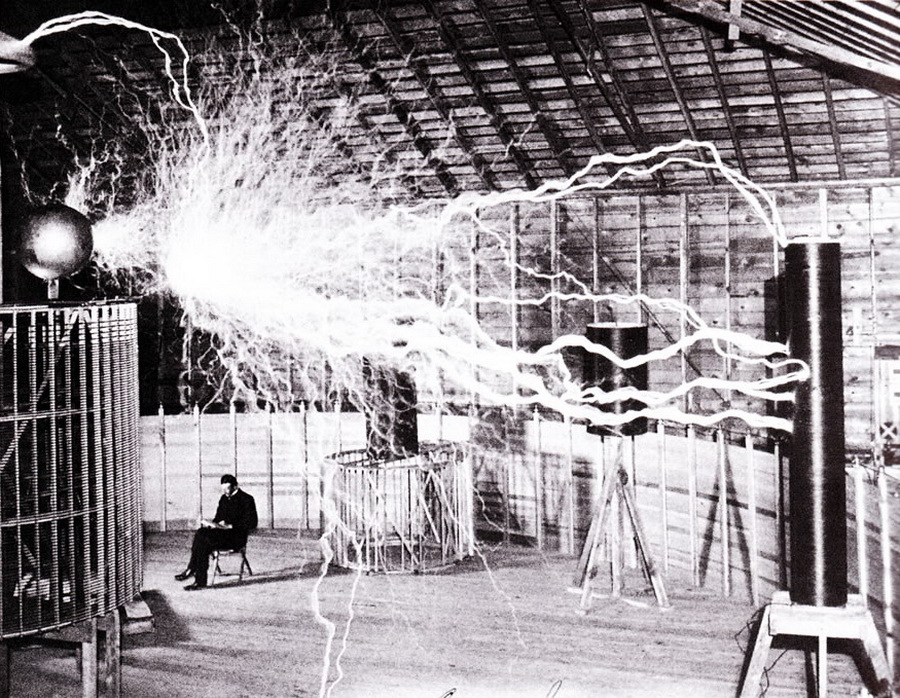
Saturday’s post mentioned Tesla coils, invented by the innovative genius Nikola Tesla. Tesla coils produce very high voltage, but low current AC electricity, and can be used to produce some amazing displays of electrical arcs (without electrocuting anyone). They can also be used to transmit electrical current without wires.

Here’s a great (though somewhat self-promotional) photograph of Tesla reposted from wikipedia:

Tesla_colorado_adjusted

(http://en.wikipedia.org/wiki/File:Tesla_colorado_adjusted.jpg)

Go check out Tesla’s wikipedia entry. Amazing inventions, heated rivalries, and historical figures abound.

Posted in Fun Science | Tagged , , , , , , | 2 Comments