CRISPR Genomic Editing Patent Disputes Heat Up

MIT Tech Review has a good article about the brewing intellectual property battle over CRISPR-Cas9 DNA editing.  The ease with which human DNA (or that of any eukaryotic organism) can be edited with the genetic engineering technique is astonishing, and will undoubtedly lead to major breakthroughs.  Unfortunately, both former collaborators Jennifer Doudna and Emmanuelle Charpentier and now other experts in the field, including Feng Zhang, are getting caught up in a web of competing patent applications and VC-funded start up companies.  There are lots of technical and scientific hurdles yet to be solved, but the pace of development is shockingly fast.  Perhaps too fast for our patent system to keep up.

In fact, given the fast clock speed of the field, and the myriad of ways in which the technology can be applied to human health problems, one wonders if the basic enabling technology shouldn’t just be cross-licensed among all the major players.  We all might benefit more rapidly.

Posted in Biotech, Innovation | Tagged , | Leave a comment

The World at Night with Clear Skies and No Light Pollution

ben-coffman-photography-1

Night sky photography of Crater Lake National Park, Oregon. (c) Ben Coffman Photography

Courtesy of TwistedSifter.com, a beautiful interview with the talented night sky photographer Ben Coffman. Follow both links; you won’t be dissapointed.

Posted in Photography, Space & Astronomy | Tagged , , | Leave a comment

Chromebooks taking iPads to school in education market

google-chromebooks-laptop-notebook-education-schools-ipads-620x422

A new IDC report claims that more laptops based on Google’s Chrome OS were shipped to schools in the third quarter than Apple’s tablets, thanks in no small part to the notebooks’ low price.

While momentum for Chromebooks in schools is substantial, this is still only a single quarter where they outsold iPads, so Apple is a far cry from flunking this latest test to its educational hegemony. Chromebook makers also need to show similar success outside of the classroom to meet analysts’ lofty sales projections. But one thing’s for sure: This new (tech) kid in school is looking pretty cool right about now.

Laptops and tablet/laptop combinations are where the trend is heading.  Tablets are wonderful for media consumption, touch and gravity-based gaming, and are great for mobile input when the parameters and values are well defined (i.e. drop down menus, buttons, and the like).  But for serious learning with actual content generation you need a bigger screen, keyboard, and a better pointing device than the tip of your finger.

Posted in Information Technology, Learning | Tagged , , , , | Leave a comment

3-D-Printing Bio-Electronic Parts

IMG_9941.JPG
With new “inks” containing semiconductors, researchers have been able to print biocompatible materials, including working LEDs.

Posted in 3-D Printing | Tagged | Leave a comment

What sort of electronic device do 6th graders really need?

Some folks have asked me what sort of electronic device does a 6th grader really need.  I can give you some insights from what I’ve seen while helping out with two FIRST Lego League teams, and the experience my son had hosting a Minecraft game server (bottom line: get a real laptop).
FLL-WorldClass

FIRST (For Inspiration and Recognition of Science and Technology) is an organization founded by Dean Kamen to promote kids’ interest in science, technology and math.  The organization hosts annual team competitions that involve a Lego Mindstorms robot competition and a team presentation.  It’s a great experience.  Besides physically building and programming a robot to perform missions, the teams do a lot of online research and typically design posters, brochures, and their own T-shirts.  Every one of these activities is greatly aided by having a laptop.  In fact, at team meetings, we usually wish we had more, especially for programming.  In contrast, we have never used a tablet.*
minecraft_image

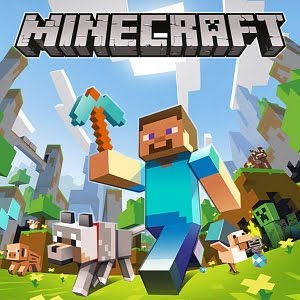
Similarly, the 3-D world building game Minecraft is a huge hit among elementary and middle school kids.  You can explore different virtual environments, build structures, and you can even use something called redstone to create the equivalent of electronic circuits.  There is a simplified tablet version of the game but, because of the limitations of a touch interface, using a full-fledged computer is a much better experience.  As with most computer games, a keyboard and mouse (or game controller) give you much greater control, and there are many features that don’t exist on the tablet version.  In fact, on a computer you can host an actual Minecraft server and invite your friends to play in a world of your own creation.

Don’t get me wrong — I love my iPad.  I use it to read books, keep up with the news, and play the occasional game with my kids.  The touch interface is often a delight.  But if you want to do something real, the first tool you need — even at 6th grade — is a laptop.  The second device, especially if your child is over 12 and has a lot of after school activities or often rides a bus, is a phone.  And a tablet –as fun as they are — would be third.

[Update:  some readers have pointed out that Microsoft’s Surface is a great combination of laptop and tablet.  I think the Surface is getting there, but it’s still not quite right.  Windows 8 in particular is not an intuitive interface.  Technical note: the main thing that an iPad lacks is mouse-based interactions, since you can add a keyboard.]

(cross posted with ipadsfor6thgrade.wordpress.com)

*Clarification:  We haven’t used tablets for content creation, but they do get used as display devices at competitions.


Posted in Education, Information Technology | Tagged , , , | Leave a comment

Happy Thanksgiving!

IMG_9911

Posted in Photography | Tagged , | Leave a comment

Average Drug Development Cost Now $2.6 Billion

Based on the latest study conducted by the Tufts University Center for the Study of Drug Development, the total cost of developing a drug is, on average, $2.6 billion.  That figure includes $1.4 billion in direct out of pocket costs for each successful drug (along with the costs of all the pipeline failures), plus time costs of $1.2 billion.  Total development costs have grown by more than 8% a year since 2003, the year of the last comprehensive study.

Bruce Booth has a nice discussion about the study assumptions, along with a downloadable development cost model that you can play with.  I also recommend reading the slide deck and backgrounder from Tufts.

While some critics of the drug industry scoff at these cost estimates, I’ll just point out that if you divide the aggregate annual R&D budgets of the top 20 Pharma companies ($81B in 2012)* by $2.6B you end up with about 31 new molecules per year, a number that is not that far off from the actual current productivity of the entire pharma/biotech industry (An average of about 33 approvals per year across 2011-2013).  That’s a very rough calculation, but it shows that the study isn’t that far off from reality**.

_____
* Source: contractpharma.com
** See also Bruce Booth’s article for much more detailed analysis of top down and bottom up cost estimates.

Posted in Fixing Big Pharma Research, Pharmaceutical Industry | Tagged | 1 Comment

Rosetta’s comet lander goes quiet

Philae Lander

Rosetta’s Philae lander has stopped transmitting from comet 67P/Churyumov-Gerasimenko.  Philae landed safely, but ended up in a shady location and couldn’t recharge its batteries using solar power.  There is some hope that when the comet gets closer to the sun (around August 2015) enough power might be generated to restart the lander’s transmitter, but it’s a long shot.

It’s too bad the mission may have ended so abruptly after a 10-year chase, but congratulations to the team for completing an amazing first in space exploration — putting a lander on a 4-mile wide comet moving at over 36,000 miles an hour!

Posted in Space & Astronomy | Tagged , , | Leave a comment

Rosetta mission succeeds in landing on a comet

IMG_9797.JPG

Really cool seeing the first ever images of the surface of a comet from the Rosetta mission, courtesy of the ESA. It really does look like a dirty snowball.

Unfortunately it seems that the lander ended up in a shady spot, which is limiting its ability to use solar panels to charge its batteries.  It’s also not yet properly anchored into the surface, and ESA scientists are actually considering a repositioning maneuver. Stay tuned…

Posted in Uncategorized | Tagged , | Leave a comment

Microsoft Office is now free for mobile devices

With relatively little fanfare, Microsoft has made Office for mobile devices free.  Faced with a minuscule software market share in the fastest growing device markets, Microsoft decided that they needed to make Office — their biggest money-maker after Windows — free for iPhones, iPads and Android devices.

As I posted last year, the age of free software is upon us.  Social media companies grew like crazy giving away their software.  Google’s free offerings expanded into email, then entire operating systems, and their own office productivity suite.  Apple followed in a major way — making its operating system, productivity tools, and many general applications all free for all devices.  Of course software is not free to create, and there are only two rational motivations to distribute software without charging for it.  One is to subsidize the software because it drives users toward other business lines.*  Google does this with its search/advertising business, while Apple makes money from hardware and iTunes sales.  The other strategy is to give away the basic version of your software and then charge users for more valuable software features or add-ons (or  in some cases for training/consulting).  LinkedIn does this for example, as do a host of “freemium” games.**

Google and Apple both have very profitable lines of business that draw customers on their own merits, and for them free software enables and extends those revenue streams.  Gaming companies can make a tidy sum from in game purchases, especially as the games themselves morph and change over time, and as users experience more and more difficult challenges within the games.  But for a firm like Microsoft — that was first and foremost a PC operating system and office productivity software company — how does this strategy play out?  How much revenue can Microsoft generate from added value features for software that competes with full-featured free equivalents from other companies?  Does Microsoft hope to generate more of their revenue from hardware sales?  It’s not clear to me that free software is anything but bad for them.

* Open source software (like Linux, R, Python, etc.) actually still operates according to this model.  Contributors either earn non-monetary (i.e. reputational) revenue, or are developing tools needed for other revenue-generating activities — but then share the resulting software.  The open source model works quite well for tools and frameworks, where giving away a tool or code module will likely result in someone else developing/giving you a useful tool in return.  It doesn’t work in the context where giving away your software destroys your business or eliminates your income.

** If you can’t follow either of these strategies, you have to charge for your software.  If that software is specialized, complex, or otherwise hard to replicate — yet provides a lot of value — people will pay for it, and you can have a viable business.

Posted in Software | Tagged , , | 1 Comment