Clayton Christensen Demolishes Jill Lepore’s Critique of Disruptive Innovation

Last week, the New Yorker published Harvard historian Jill Lepore’s sharply worded critique of both Clayton Christensen and his theory of disruptive innovation.  Some journalists piled on, further deriding “disruption zealots” and their leader, while others jumped to Christensen’s defense.  Meanwhile, Drake Bennet at Business Week decided to give Clay a call and ask him to respond to the surprisingly personal attack.  The result was a one hour phone conversation in which Clay completely demolished Lepore’s article, and made a pretty good argument that — at least in this particular case — she’s a shoddy researcher.  Incredibly — despite the fact that they have offices at Harvard about 15 minutes apart, Lapore has never even talked to Christensen:

Well, in the first two or three pages, it seems that her motivation is to try to rein in this almost random use of the word “disruption.” The word is used to justify whatever anybody—an entrepreneur or a college student—wants to do. And as I read that, I was delighted that somebody with her standing would join me in trying to bring discipline and understanding around a very useful theory. I’ve been trying to do it for 20 years.

And then in a stunning reversal, she starts instead to try to discredit Clay Christensen, in a really mean way. And mean is fine, but in order to discredit me, Jill had to break all of the rules of scholarship that she accused me of breaking—in just egregious ways, truly egregious ways. In fact, every one—every one—of those points that she attempted to make [about The Innovator’s Dilemma] has been addressed in a subsequent book or article. Every one! And if she was truly a scholar as she pretends, she would have read [those]. I hope you can understand why I am mad that a woman of her stature could perform such a criminal act of dishonesty—at Harvard, of all places.

I’m just stunned that any honest scholar would have done what she did to disparage the person and the theory. She [appears to have] only read one book at the beginning in the naive belief that the end comes out at the beginning.

Read the whole thing.  I had the good fortune to attend a series of seminars by Clay Christensen last year, and he was one of the most thoughtful and intellectually careful speakers I have ever heard.  I wonder if Lepore ever actually listened to one his lectures — especially a live one where he answered questions and responded to comments.

Getting back to hyperventilating critiques of disruptive innovation, I don’t see what the fuss is all about.  Yes, it’s a term overused by people who don’t fully understand the concept; yes it doesn’t explain everything; yes, firms that are disrupted don’t necessarily fail completely; and yes, the theory’s predictions are often not actionable.  But that’s the whole point — disruptive innovations come out of a sea of bad ideas and mediocre technologies.  It’s extremely hard to recognize them when they first appear.  And incumbent firms by their very nature find it difficult — if not impossible –to respond because disruptive innovations will cannibalize existing products that are (at the moment) more profitable. Perhaps more important, disruptive innovations threaten the careers of incumbent employees.  Recognizing how hard it was to take action, Christensen called his first book “The Innovator’s Dilemma.”

A recommendation from the theory that is actionable, however, is for all of us to do a better job recognizing the growth potential and unanticipated value that can be created by upstart technologies.

Posted in Innovation, Management | Tagged , , | Leave a comment

Under the Grand Chapiteau

… of Cirque du Soleil.  In the rigging there is an incredible amalgamation of technology and artistry that extends the capabilities of performers in astonishing ways.

GrandeChapiteau

Posted in Photography | Tagged | Leave a comment

NASA Makes Progress on World’s Largest Rocket

Image

Yahoo News has a short video on the progress NASA is making developing the Space Launch System (SLS), which would be the world’s largest rocket when operational.  Unfortunately, what NASA has produced to date is mostly scale models and animated movies, with the first test launch of a working booster scheduled more than three years from now.

SpaceX, meanwhile, has a working rocket that has already delivered cargo to the International Space Station.  Admittedly, the current Space X rocket is significantly smaller, but it looks to be several times cheaper than existing launch systems per kg of cargo.  Primarily, this is because the SpaceX main booster is designed to land itself and be re-used.   Overall, SpaceX looks like the disruptive innovator in this matchup.  It will be interesting to see if its platform — currently inferior to the SLS — eventually outpaces the capabilities of NASA’s system.

Image source: http://science.howstuffworks.com/space-launch-system.htm

Posted in Innovation, Space & Astronomy | Tagged | Leave a comment

Los Angeles County is Moving All Employees to the Cloud

All 100,000 LA County employees, including 20,000 police are moving to Office 365 for their business work environment. Besides the savings from consolidating various department installations into one contract, cutting maintenance costs, and only paying for active employees, security was a big factor:

The county’s desire to maintain its stringent standards for security and privacy requirements, including the Criminal Justice Information Services (CJIS) standard and the Health Insurance Portability and Accountability Act (HIPAA), was another major factor in its decision

If LA County can do move to the cloud and be HIPPA and CJIS compliant, why can’t your company do it?

Posted in Information Technology, Innovation | Tagged , , , | Leave a comment

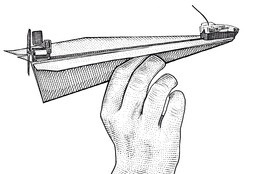
Paper Airplanes Transform Into Tiny Drones

20140610-105711-39431394.jpg

From the WSJ: Fold a sheet of paper a few times, clip on a tiny propeller and rudder, launch an iPhone app, and you have a mini drone.

Posted in Innovation | Tagged , | Leave a comment

A Learning Secret: Don’t Take Notes with a Laptop

Students who used longhand remembered more and had a deeper understanding of the material, in new research elegantly explained by Cindi May:

Research by Pam Mueller and Daniel Oppenheimer demonstrates that students who write out their notes on paper actually learn more.

Half of the students were instructed to take notes with a laptop, and the other half were instructed to write the notes out by hand.  As in other studies, students who used laptops took more notes.  In each study, however, those who wrote out their notes by hand had a stronger conceptual understanding and were more successful in applying and integrating the material than those who used took notes with their laptops.

The temptation of laptop internet access also provides a huge distraction in many cases:

In most typical college settings, however, internet access is available, and evidence suggests that when college students use laptops, they spend 40% of class time using applications unrelated to coursework, are more likely to fall off task, and are less satisfied with their education.  In one study with law school students, nearly 90% of laptop users engaged in online activities unrelated to coursework for at least five minutes, and roughly 60% were distracted for half the class.

Technology offers innovative tools that are shaping educational experiences for students, often in positive and dynamic ways.  The research by Mueller and Oppenheimer serves as a reminder, however, that even when technology allows us to do more in less time, it does not always foster learning.  Learning involves more than the receipt and the regurgitation of information.  If we want students to synthesize material, draw inferences, see new connections, evaluate evidence, and apply concepts in novel situations, we need to encourage the deep, effortful cognitive processes that underlie these abilities.  When it comes to taking notes, students need fewer gigs, more brain power.

Read the whole thing.

Personally, I’ve found that the best classes provide all the detailed information you need in textbook or PowerPoint format, and then let you take notes on more conceptual, explanatory, or synthetic topics — without having to strain to get all the material recorded.  My own gut feeling is that typing on a keyboard — thought faster than handwriting — demands more of your brain than handwriting and therefore somewhat blocks synthetic and conceptual thought.  For example, I notice that I stop typing when I’m thinking hard, and then I put in a burst of typing to record the words that I just formulated in my head.  Bottom line: use technology to leverage your mind, not to distract it.


Posted in Learning | Tagged , , , , | 1 Comment

The Future of Work Looks Like a UPS Truck

UPS Truck

UPS used to be a trucking company.  Now it’s a technology company; every truck a rolling computer with artificial intelligence tracking wherever the vehicle and its packages go, trying to make deliveries quicker and more efficient.  At the center of the entire web of technology is a human driver.  Check out NPR’s Planet Money for the story of one such UPS employee, Bill.

Posted in Information Technology, Innovation | Tagged , | Leave a comment

Pfizer gives up the chase.

Pfizer is saying today that it does not intend to extend a firm offer for AstraZeneca, bringing an end to its attempt to acquire the UK drug maker.  AZ shareholders were split on the latest offer, and a stumble by AZ would probably bring many of them back to the negotiating table.  Per UK securities law, a six month month cooling off period now follows. I’m guessing Pfizer will be waiting, and watching.

Posted in Pharmaceutical Industry | Tagged , , | Leave a comment

China crackdowns squeeze pharma margins

From Reuters:

A crackdown on corruption and pricing in China’s fast-growing pharmaceutical market has squeezed profits and margins, raising a red flag to global Big Pharma that the days of easy growth in the country may be over.

Over the past year, China has cracked down on high prices and corruption in the healthcare sector. Authorities probed drugmakers over pricing in July, while a high-profile investigation into British drugmaker GlaxoSmithKline Plc led to executives at the company being charged with bribery earlier this month.

Sales growth is slowing dramatically, as the country is starting to come to grips with the truly gigantic costs of healthcare (likely to hit $1 trillion by 2020, according to McKinsey).  And then there is the issue of favoritism toward domestic firms:

Generics specialist Actavis Plc pulled out of China this year, saying the market was too risky and not a business-friendly environment.

“When you have 5,000 competitors you have to be special, and being a foreign company is no longer enough,” said Guillaume Demarne, Shanghai-based business development manager at healthcare research body Institut Pasteur.

Branded generics, as a strategy, may not work out as well as many had hoped.  Indeed, there are rumors that firms are backtracking already.

Posted in Pharmaceutical Industry | Tagged , , | Leave a comment

Vinod Khosla says replacing doctors with data crunchers is good medicine

Valley Beat author Mark Sullivan has a short article on some remarks by Vinod Khosla at Stanford University School of Medicine’s Big Data in Biomedicine Conference:

Khosla has for a long time believed that machines armed with mountains of data will (and should) make most of the clinical decisions in the future, eliminating the need for most doctors. Humans, he believes, just can’t handle enough data to understand and prevent illness.

Basically, mechanized intelligence will by and large replace doctors.

Naturally, some of the doctors in the audience at Stanford didn’t care much for Khosla’s comments. “I don’t agree with 80 percent of your remarks,” said one.

A bit more diplomatic, the author suggest a more useful approach will be a combined human and data crunching approach. Read the whole thing.

Posted in Healthcare, Innovation | Tagged , , , | Leave a comment