Fun Science: The Backyard Cricket Thermometer

The loud crickets chirping in unison tonight reminded me of A. E. Dolbear’s observation that crickets can tell you the current temperature.  According to his classic 1881 communication:

T = 50 + (N-40)/4

where N is the number of field cricket chirps per minute, and T is the temperature in Fahrenheit.  An easier to remember equivalent is

T = N + 40

where, in this case, N is the number of chirps in 15 seconds.

I gave it a try tonight.  I counted 91.7 ± 2.1 chirps per minute, yielding a calculated temperature of 62.9 ± 0.5 degrees.  The actual reading on the thermometer outside?  61 degrees.  Pretty good accuracy, and no instrumentation required.

Bonus science trivia:  All nearby crickets of the same species will synchronize their chirping — despite the fact that the males are actually competing with each other for mates.

Extra bonus science trivia: The chirping rate of crickets (and many activities of cold blooded creatures) actually follows the Arrhenius equation for the temperature dependence of chemical reaction rates.  The chirping rate is a function of temperature because of the underlying biochemical reactions that give the cricket the energy it needs to chirp.

[Reposted from 8/16/13.  Outside my window, tonight’s chirp count was 104/min, or 66 degrees, and the actual thermometer reading was 64.]

Posted in Fun Science | Tagged , | Leave a comment

August Sky, Eastern Massachusetts

AugustSkyEasternMA

Posted in Photography | Leave a comment

iPads for 6th grade

More updates at ipadsfor6thgrade.wordpress.com, for those who are interested in the ongoing story of one Massachusetts school district’s mandatory adoption of individual iPads for 6th graders.

Posted in Information Technology, Learning | Tagged , | Leave a comment

The Art of Thinking Clearly

Rolf Dobelli has published a great book that will help you think more clearly about life, work. government — just about everything.  The Art of Thinking Clearly is a collection of short three-page chapters describing 99 different cognitive biases that we humans suffer from.  Sunk cost fallacy, story bias, fear of regret, hyperbolic discounting, illusion of skill, cherry picking, and 93 others (many of which you probably haven’t heard of). They’re all here in one comprehensive and very accessible collection. Being aware of cognitive biases can help you avoid a lot of the pitfalls of the modern world, but it’s only the first step.  As Rolf says in the introduction:
This is not a how-to-book.  You won’t find “seven steps to an error-free life” here.  Cognitive errors are far too engrained to rid ourselves of them completely.  Silencing them would require superhuman willpower, but that isn’t even a worth goal.  Not all cognitive errors are toxic, and some are even necessary for leading a good life.  Although this book may not hold the key to happiness, at the very least it acts as insurance against too much self-induced unhappiness.

Indeed, my wish is quite simple:  If we could learn to recognize and evade the biggest errors in thinking — in our private lives, at work, or in government — we might experience a leap in prosperity.  We need no extra cunning, no new ideas, no unnecessary gadgets, no frantic hyperactivity — all we need is less irrationality.

It’s a fast, fun read — with plenty of humorous anecdotes (and lots of endnotes, if you want to read more) — summarizing decades of academic research and real world learning.

Posted in Management | Tagged , , | Leave a comment

Self-assembling robots that fold themselves and then walk away

self-assembling_robots

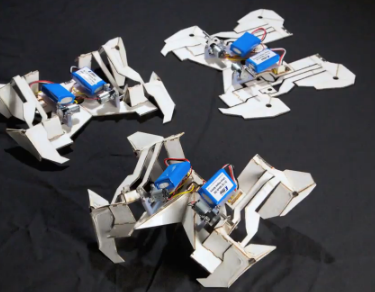
Harvard researchers interested in creating self-assembling electromechanical systems are building miniature robots from a few motors, polystyrene sheets, and some paper.  Inspired by origami and copying some of the properties of the kid’s toy Shrinky Dinks, the team created robots that start flat, fold themselves up and then walk  away.  IKEA flat packs meet Transformers!

Follow the link to a cool video on the Boston Business Journal web site.

Posted in Automation, Innovation | Tagged , | Leave a comment

Minnesota man prints 3-D castle in his back yard

20140803-192627-69987335.jpg
In Minnesota, a contractor with an engineering background is almost finished printing a castle out of concrete, using a device he invented himself.
Read the whole thing on 3dprint.com.

Posted in 3-D Printing | Tagged | Leave a comment

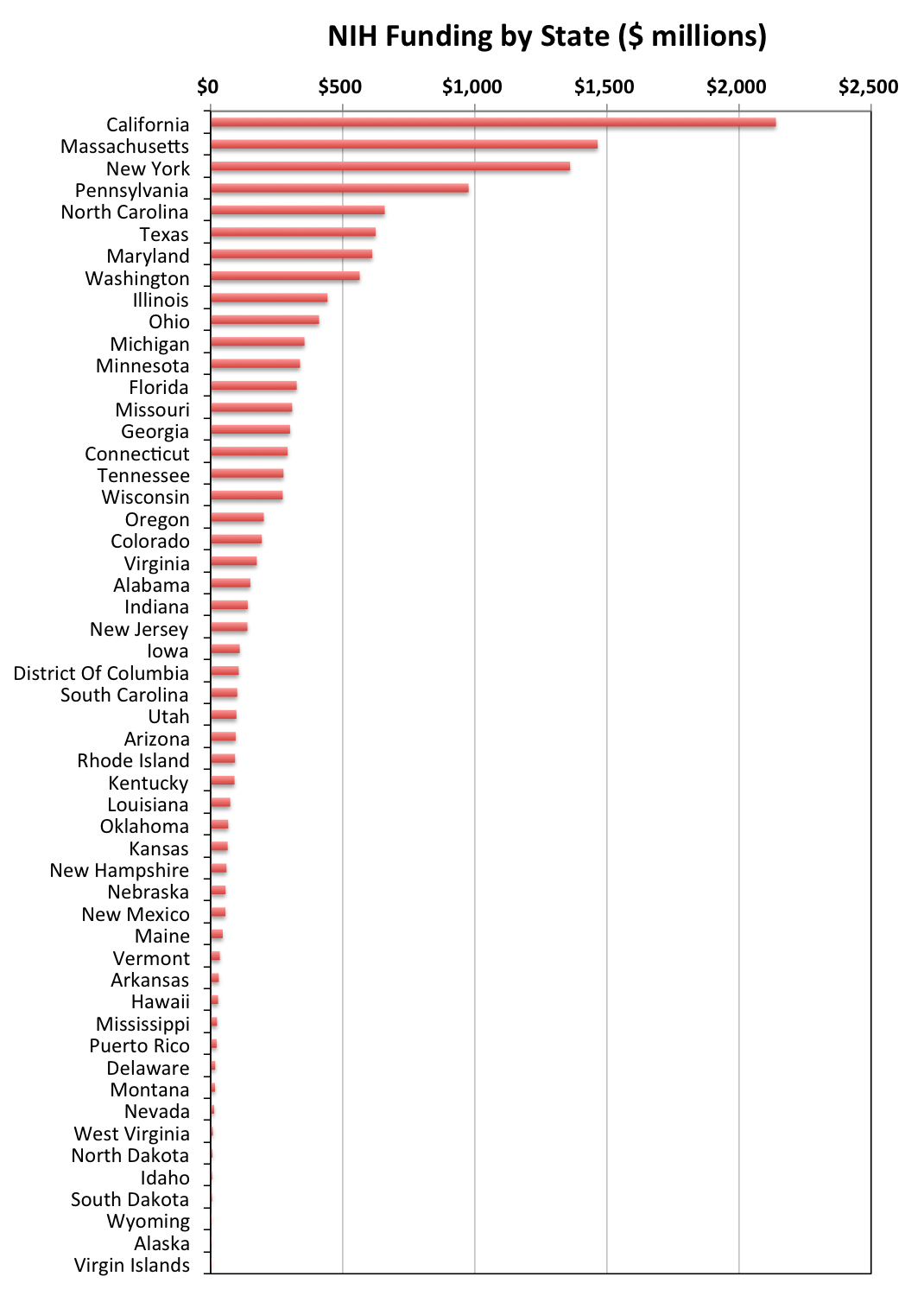
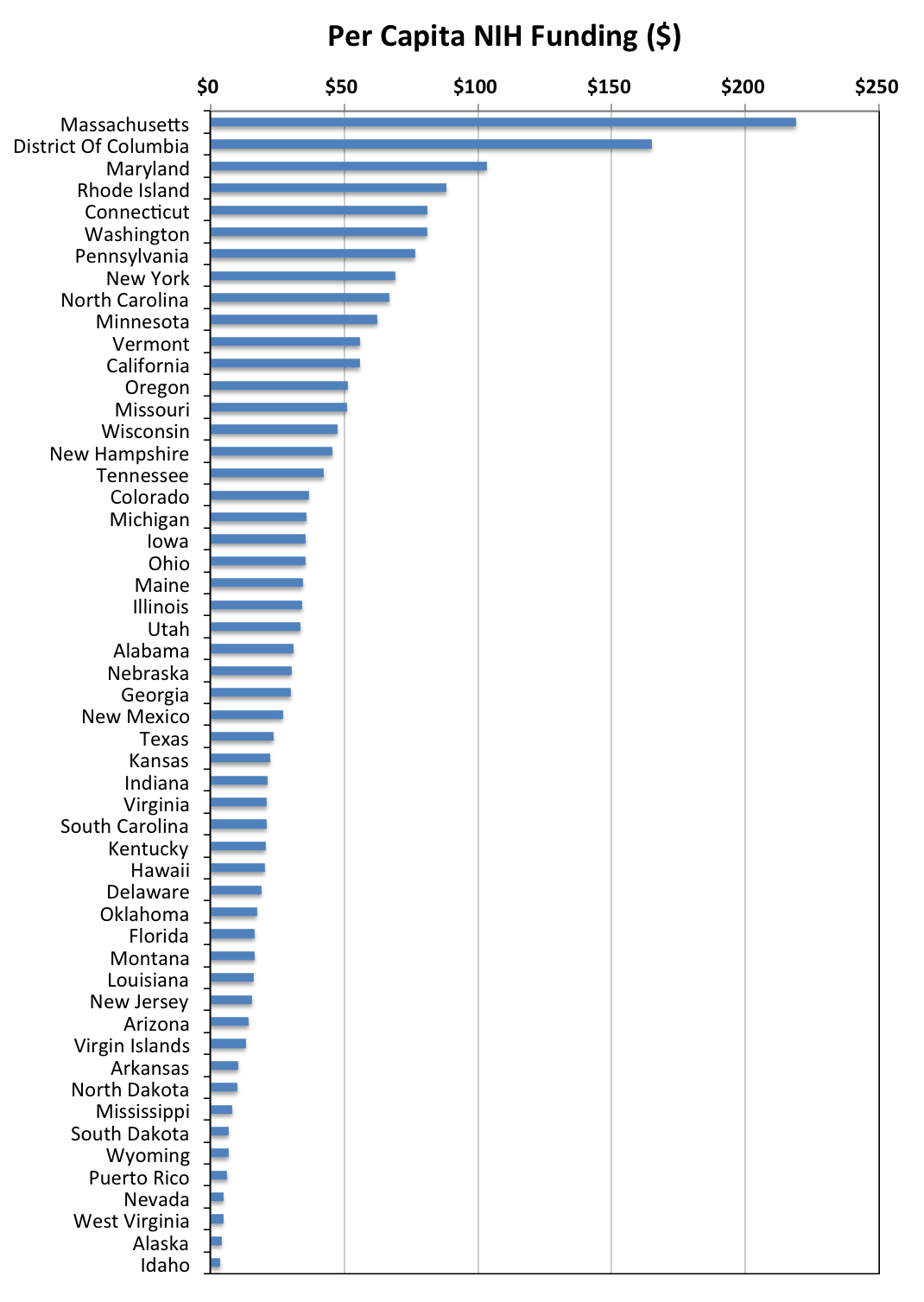
Infographic: Total and per capita NIH award funding by state

Mid-way through 2014, California currently leads the nation with $2.1 billion in National Institutes of Health (NIH) award funding, while Massachusetts and New York are ranked 2nd and 3rd, with about $1.4B each.  Not surprisingly, Massachusetts — much smaller in size and population — has far and away the most concentrated NIH funding per capita, currently at $218.  That’s about 4 times California and 3 times New York, and a big reason for the strength of the Cambridge/Boston biotech hub.

NIH Funding by StatePer Capita NIH Funding by State

[Update:  Note that these figures from the NIH are 2014 year to date. Full year 2103 data can be found in the Data Center]

NIH competitive award funding data as of 28 July 2014:  http://nih.gov.  Total NIH annual appropriations for 2014 will be $30 billion, with award funding likely around $22-$24 billion (FY 2013 award funding was $22 billion).

Population data (July 1, 2013 estimates): http://en.wikipedia.org/wiki/List_of_U.S._states_and_territories_by_population.

Outliers: The District of Columbia has a relatively small amount of NIH funding ($107 million), but only 650,000 people, hence per capita spending of $165.  NIH intramural funding at the Bethesda medical research campus is not included in this data, and would raise the Maryland total and per capita funding numbers somewhat.

Posted in Biotech, Pharmaceutical Industry, Research | Tagged , | Leave a comment

Why isn’t New York City a Biotech Hub?

An article in the Wall Street Journal says that high rents are the problem:

It also underscores a wider problem for the city as it tries to attract biotech away from thriving centers like San Francisco and Boston—an inability to build affordable lab space near large academic medical institutions on the Upper East Side. BioBAT was supposed to be the answer, but its Sunset Park location, far from the center of activity, has made it a tough sell, according to industry experts and brokers.

I’ve heard the NYC area is doing especially well in genomics and human genetics, areas in which big hospitals and big, diverse patient populations are an advantage — but where large amounts of lab space aren’t needed.  It’s easier to be competitive in a high rent area, if you don’t need a lot of space.

Besides the expense, I think NYC and the NY/NJ region also suffers because it is so big and sprawling.  High density with short travel times are a real advantage for collaborations, or VC and licensing visits.  In Cambridge/Boston, for example, a pretty surprising amount of biomedical research is done within a 20 min walk of Kendall Square. An amazing amount is happening within a three mile radius.


Posted in Biotech, Pharmaceutical Industry | Tagged , , , , | Leave a comment

Sam Altman of Y Combinator thinks biotech is one of the next hot areas for investing

Y Combinator

In a recent interview Sam Altman (the current president of Y Combinator, the famous Silicon Valley startup incubator) was asked which areas of investing did he thing were really hot, yet under appreciated.  Altman immediately brought up biotech — an area that he thought not enough investors were paying attention to.  Why biotech now?  The costs of doing experiments are much lower, and the amounts of data that can be generated by increasingly automated laboratories are astonishing.  In addition, startup companies are more and more virtual (e.g. using Amazon Web services for all their computing). But the single biggest factor is that cycle times are now much shorter, according to Altman.

[…] biotech is probably a very good idea. But in the first biotech boom it was just too early. The costs were too high and the cycle time was too long. And I’ve really come to believe that those two things, low cost and low cycle time, are the most important things for startups in a given area to be successful. But now, in biotech specifically, which is an area where we’ve been active recently, the costs and the cycle time have come down quite dramatically. And so you are able to have a startup that for a few million dollars or in a year or something can get something really meaningful done. And that’s a brand new thing. And that’s hugely, like a gigantic megadeal–I think most people still fail to understand that.

Listen to Russ Robert’s EconTalk for the full interview (audio and transcript) on Startups, Venture Capital, and the Y Combinator.  The biotech discussion happens a little after the 29:25 mark.

Posted in Biotech, Innovation | Tagged , , , | Leave a comment

Broad Institute Receives $650M for Psychiatric Research

20140722-163130-59490893.jpg
The Broad Institute, a biomedical research powerhouse in Cambridge, Massachusetts, has received the biggest gift ever for psychiatric research, totaling $650 million. The commitment from Ted Stanley (already a large donor) coincides with publication of the largest genomic study of schizophrenia, published yesterday in the scientific journal Nature. The Boston Globe has all the details about the donation, along with the backstory on Stanley’s philanthropy and his family’s experience with mental illness.

Update:  Over at Derek Lowe’s In the Pipeline, there’s some interesting discussion, including a couple of humorous comments about bobble head dolls for various famous academics.

Posted in Science | Tagged , , , | Leave a comment